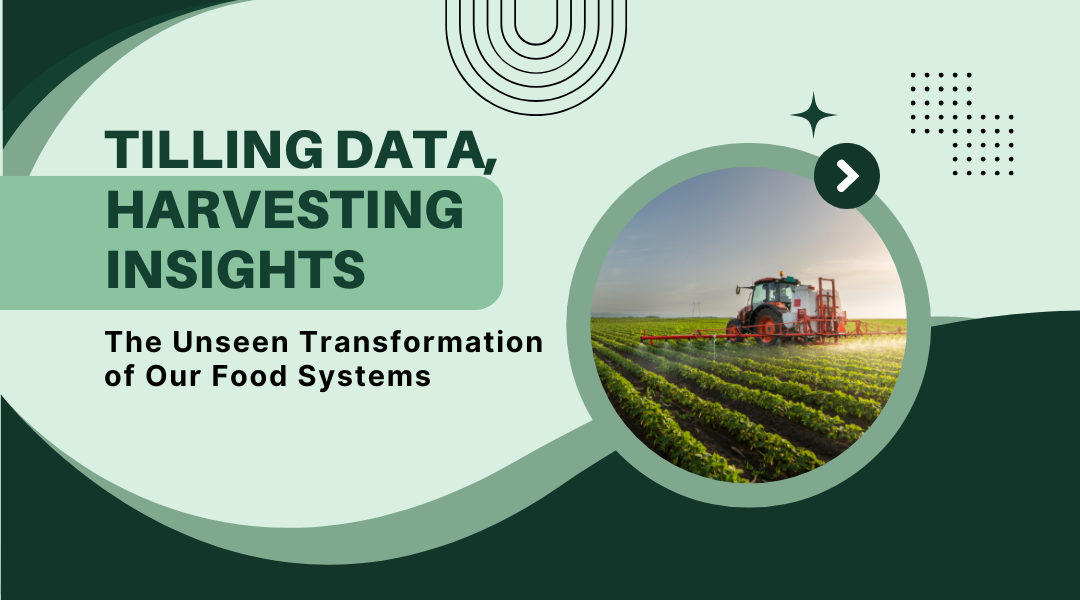
If you close your eyes and picture a farm, you might still see a timeless scene of rolling hills and a tractor kicking up dust. But look closer. That tractor has no driver, and the farmer is consulting a live data stream on a tablet. We are in the midst of a profound, quiet revolution in agriculture, where the most valuable crop isn’t corn or soy—it’s data. This shift is moving farming from an artisanal craft, dependent on weather and intuition, toward a precise, predictive science.
The New Farmhand: Bytes and Bandwidth
The foundation of this change is a layer of digital intelligence now blanketing the land. It’s a world away from the almanac-and-anecdote wisdom of the past.
- The Soil’s Secret Language: Forget just checking if the ground is wet. Today’s farms are studded with subterranean sensors that act as a continuous medical monitor for the earth. They can detect a calcium deficiency in one corner of a field while flagging a pH imbalance in another. In vineyards, for instance, these sensors don’t just measure water; they track sap flow in the vines themselves, a direct line to the plant’s stress levels, allowing for irrigation so precise it can influence the nuanced flavor profile of the grapes.
- Eyes in the Sky with a Purpose: Drones have evolved from expensive toys to essential field scouts. But they’re not just capturing photos; they’re using multispectral imaging to see a narrative invisible to the human eye. A drone pass over a potato field can identify a blight infection days before any spotting appears on the leaves. It can see which parts of a vast wheat field are struggling for nitrogen, painting a “prescription map” that tells a smart spreader exactly where to apply fertilizer and, just as importantly, where not to. This moves us from broadcast bombing to surgical strikes, saving inputs and protecting the environment.
The Rise of the Robotic Workforce
The data is useless without action, and that’s where a new generation of autonomous machines comes in.
- Weed-Sniping Lasers and Gentle Pickers: Picture a sleek, solar-powered robot, moving silently through a row of organic lettuce. Its onboard cameras and AI don’t just “see” plants; they identify them. In a flash, it zaps a weed with a micro-dose of laser energy, leaving the lettuce completely untouched by chemicals or machinery. Meanwhile, in an apple orchard, a different kind of robot uses a soft, vacuum-powered gripper to twist a single ripe fruit from a branch, judging its ripeness by its color and slight give. These machines don’t get tired, they don’t need lunch breaks, and they work all night under stadium lights.
- Irrigation with a Brain: Water management is being utterly transformed. Smart irrigation is no longer about simple timers. We’re now seeing systems that function like a collective consciousness for a farm’s water needs. Imagine an AI that cross-references live soil moisture data, hyper-local weather radar predicting a 40% chance of rain, and the specific evapotranspiration rate of a new drought-tolerant corn hybrid. It then makes a judgment call: it withholds water from the east forty acres because a storm is likely, but waters the west section lightly to prepare it for a hot, dry day forecasted for tomorrow. This is water stewardship at a genius level.
Connecting the Dots: From Local Yields to Global Resilience
The true power of this technological wave emerges when we zoom out from a single farm to the entire global food system.
- Predictive Power and Market Stability: By aggregating anonymized data from thousands of farms, we can build powerful predictive models. A coffee growers’ cooperative in Colombia can access a forecast estimating their harvest yield with 95% accuracy three months before the beans are picked. This allows them to secure forward contracts with roasters at a fair price, bringing unprecedented financial stability to a historically volatile market.
- A Shield for Food Security: On a macro scale, this is a game-changer for preventing famine. Satellite imagery combined with field-level data can identify a locust swarm developing in North Africa or a drought pattern emerging in Southeast Asia. This early warning system allows governments and aid organizations to act proactively—shipping resilient seeds, providing targeted support, and helping farmers adapt before a crisis becomes a catastrophe.
- Farming as a Climate Solution: Perhaps most critically, this data-driven approach is key to making agriculture a healing force for the planet. By applying nitrogen fertilizer with pinpoint accuracy, we can slash emissions of nitrous oxide, a greenhouse gas 300 times more potent than CO2. Furthermore, by monitoring soil organic carbon, we can verify and incentivize farming practices that pull carbon from the atmosphere and sequester it back into the earth, turning our farmlands into a massive, living carbon sink.
Navigating the Inevitable Headwinds
This transition is not without its very real challenges. The initial cost of technology is a significant barrier for many family-run operations, risking a “digital divide” in agriculture. There are pressing questions about data ownership and privacy—does the farmer or the ag-tech company own the information about her soil? And as automation advances, we must have honest, compassionate conversations about the agricultural workforce, focusing on creating new, high-skill jobs in rural communities, from drone operators and data analysts to robot repair technicians.
Conclusion: A Symbiotic Harvest
The future of farming is not a cold, sterile vision of factories without people. It is a sophisticated, symbiotic partnership. The farmer’s deep, generational knowledge of the land—the way a breeze feels before a storm, the subtle shift in the soil—is now being augmented by a flood of real-time, objective data. It’s the marriage of gut feeling and gigabytes.
To reap the full benefits of this revolution, we need a collective effort. It requires tech developers who listen to farmers, not just dictate to them. It demands policymakers who craft smart regulations that encourage innovation while protecting farmers’ rights and the land. And it depends on all of us, as consumers, understanding and supporting this more sustainable path forward.
The seeds of this new era have been sown. With careful nurturing, collaboration, and a shared vision, the harvest promises to be not only more abundant but also more resilient, equitable, and in harmony with the planet we all call home.